Timeless Charm: Designing with Vintage Parisian Street Backgrounds
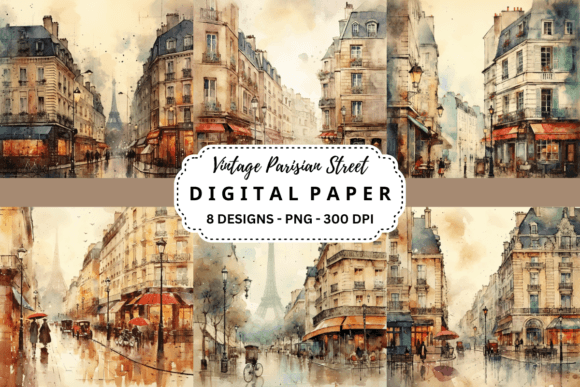
There is a specific romanticism attached to the streets of Paris that transcends time. It is the texture of old cobblestones, the intricate ironwork of balconies, and the soft, diffused light that seems to settle over the city in the afternoons. Capturing that atmosphere in digital design can be difficult, but having the right design assets makes all the difference. These Vintage Parisian Street Backgrounds offer more than just a picture; they provide a narrative foundation for your creative projects.
When working with this collection, you are dealing with high-resolution imagery—eight distinct files, each measuring 3600 x 3600 pixels at 300 DPI. This is professional-grade quality. The resolution ensures that whether you are working on a massive billboard or a small, intricate label for a jar of homemade jam, the image remains crisp and retains its integrity. There is no pixelation, only the rich, nostalgic details of a bygone era.
Setting the Scene: Visual Characteristics and Atmosphere
The appeal of these backgrounds lies in their ability to evoke a specific mood without overwhelming the viewer. Visually, they likely feature the classic elements of Parisian architecture: Haussmannian buildings, the muted tones of limestone, and perhaps the rustic charm of a café terrace. The color palette in vintage imagery tends to lean toward desaturated earth tones, soft creams, and faded grays, which acts as a perfect canvas. This lack of harsh, oversaturated colors allows other elements in your design—such as typography or product photos—to stand out.
For a designer, this "visual noise" is actually a feature, not a bug, provided it is used correctly. It adds texture and depth that a solid color background simply cannot achieve. It suggests history, authenticity, and a certain je ne sais quoi. When you place a modern, clean sans-serif font over a textured vintage street scene, the contrast creates a dynamic tension that is visually arresting. It bridges the gap between the past and the present, making the content feel grounded yet contemporary.
Practical Applications for Modern Creators
Understanding where to deploy these assets is key to maximizing their value. Because these are raster images rather than vector files, they are incredibly versatile for layering. Here is how different professionals can integrate them into their workflow:
- Social Media and Marketing: In the fast-paced world of Instagram or Pinterest, stopping the scroll is essential. A Parisian background serves as an elegant backdrop for quote graphics, sale announcements, or lifestyle branding. For influencers or fashion brands, these images can frame product shots, adding a layer of sophistication that suggests a high-end market positioning.
- Invitations and Stationery: For event planners and crafters, these files are gold. A wedding invitation set against a faint, romantic street view immediately sets a tone of elegance. The 300 DPI resolution is critical here; it ensures that when the design goes to print, the gradients and textures look smooth and professional, not muddy.
- Packaging and Labels: Small business owners selling artisanal goods—think perfumes, teas, or chocolates—can use these backgrounds to create a label that feels "imported" or "heritage." It elevates the perceived value of the product. By using the background as a subtle texture layer and reducing the opacity, you can create a watermark effect that adds richness to the packaging design.
- Web Design and Branding: While you wouldn't use a busy photograph as a background for long-form body text (due to readability issues), these images work beautifully for website hero sections, headers, or "About Us" pages. They help establish a brand identity that values tradition, beauty, and quality.
Integrating with Typography and Brand Identity
One of the most common challenges when using photographic backgrounds is ensuring legibility. A busy street scene can easily swallow text if not handled with care. This is where your choice of typeface becomes a strategic decision.
If your brand identity relies on a script font or a handwritten font for headers, ensure the background area behind that text is relatively clear—perhaps focusing on a section of the sky or a blurred wall. For body text, you should almost always use a solid color block or a semi-transparent overlay to ensure high contrast. A serif font often pairs beautifully with vintage aesthetics, reinforcing the classic feel, while a bold sans serif font can provide a necessary modern edge to prevent the design from looking dated.
Consider the hierarchy of your information. The background should support the message, not compete with it. By utilizing the rule of thirds in photography, you can position your key subject or text in the "negative space" of the image. For example, if the street scene is heavier on the left, place your typography on the right. This balance creates a harmonious composition that guides the viewer's eye naturally.
Evaluating Fit and Licensing
Before diving into a project, it is wise to evaluate if the specific aesthetic matches the client's or your own brand voice. These vintage backgrounds are perfect for industries related to fashion, travel, luxury goods, bridal, and artisanal crafts. However, they might feel out of place for a tech startup focused on futuristic AI or a brand targeting extreme sports. Context is everything in graphic design.
Furthermore, always review the licensing terms associated with commercial fonts and assets. Since these backgrounds are designed for commercial use, they open the door for print on demand projects, merchandise, and client work. However, checking the specific allowances for redistribution (such as selling the raw file on a t-shirt as the sole design element versus using it as part of a larger, transformative design) is a professional necessity.
Final Thoughts on Texture and Storytelling
Ultimately, design is about storytelling. A flat, white canvas tells a story of minimalism and clarity. A Vintage Parisian Street Background tells a story of romance, history, and timeless style. By leveraging the high-quality 3600 x 3600 resolution, you give yourself the creative freedom to crop, zoom, and manipulate the image to fit your vision. Whether you are creating a digital scrapbook, a banner for an online store, or a sophisticated poster, these assets provide a strong visual foundation that resonates with audiences who appreciate beauty and craftsmanship.