Twill Backgrounds: Textured Depth for Your Digital Paper Crafts
The Visual Character of Twill Backgrounds
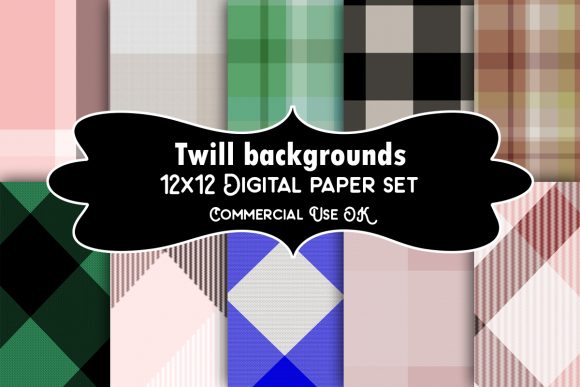
When you're deep into a design project, the background often makes or breaks the final result. A flat color feels sterile. A busy pattern overwhelms the content. That sweet spot between visual interest and functional restraint is exactly where Twill Backgrounds operates. These digital papers capture the woven, textile-like quality of real twill fabric — those diagonal lines that create a subtle rhythm without demanding center stage.
What makes this collection worth your attention is the range. You're not getting ten variations of the same gray cloth. The Twill Backgrounds digital paper pack spans various shades, textures, and orientations, giving you genuine versatility. Some files lean warm and earthy. Others carry cooler, more contemporary tones. A few have that slightly distressed, lived-in quality that works beautifully for rustic or vintage-inspired projects, while others feel clean and polished enough for corporate materials.
At 300 DPI in 12×12 inch JPG format, these files hold up under scrutiny. You can scale them for print without worrying about pixelation, and the resolution gives you room to crop into specific sections when you need a tighter composition. Ten high-resolution files might sound modest, but when each one offers a genuinely different mood and texture, you end up with a toolkit rather than a collection of duplicates.
Where Twill Backgrounds Actually Work
Let me be direct about something — textured backgrounds are easy to misuse. Slap a woven pattern behind body text and you've got a readability nightmare. But use them thoughtfully, and they add warmth, dimension, and a tactile quality that flat backgrounds simply cannot achieve.
Card making and paper crafts are the obvious starting point. Twill textures translate naturally to handmade aesthetics. Think greeting cards, gift tags, invitations, and party decorations. The woven pattern gives projects an artisanal feel without you needing to photograph actual fabric. For scrapbooking, these backgrounds anchor your layouts with visual weight while keeping the focus on your photos and journaling.
In graphic design and web design, twill textures serve as hero backgrounds for landing pages, section dividers, or header images. They work particularly well for brands in the lifestyle, outdoor, fashion, or home goods space — anywhere that textile association feels organic rather than forced. I've seen designers use similar textures behind pricing tables, testimonial sections, and about-page hero images to great effect.
Social media graphics benefit enormously from textured backgrounds. When your content needs to stand out in a feed dominated by flat colors and stock photos, a subtle twill pattern adds just enough differentiation. It photographs well when screenshotted, and it carries a sense of intentionality that generic backgrounds lack.
For business and branding applications, consider using these backgrounds in presentation decks, business card designs, packaging mockups, or letterhead. The textile quality communicates craftsmanship and attention to detail — values that resonate across industries from artisan food brands to boutique consulting firms.
Making Smart Design Choices with Textured Backgrounds
Here's where practical experience matters more than theory. Visual hierarchy becomes critical when you introduce texture. Your foreground elements — headlines, logos, product images — need enough contrast to separate from the background. This usually means pairing textured backgrounds with solid-colored text blocks or overlaying semi-transparent shapes that create a clean reading surface.
Font pairing deserves serious consideration here. Twill textures have an organic, handcrafted personality that pairs naturally with serif fonts and script fonts for traditional or elegant projects. For a more contemporary contrast, try pairing them with clean sans serif fonts — the tension between modern typography and textured backgrounds creates visual energy. Avoid overly decorative handwritten fonts on busy twill patterns; the combination tends to feel cluttered.
When evaluating whether these design assets fit your project, run this quick test: place your primary content — whether that's a logo, headline, or product photo — over the background at actual size. Step back. If your eye goes to the texture first, it's competing with your content. Adjust opacity, add a gradient overlay, or choose a subtler variation from the pack.
Brand consistency matters if you're incorporating textured backgrounds into your brand identity. Pick two or three complementary patterns from the collection and use them consistently across your materials. This creates recognition without monotony. Your audience starts associating that specific textile quality with your brand — a powerful subtle cue.
For editorial design and packaging design, think about how the twill texture interacts with photography. Product shots with clean backgrounds tend to sit well on textured surfaces. Lifestyle photography might compete. Test different combinations before committing.
One final note on practicality: these JPG files work across virtually every design platform — Photoshop, Illustrator, Canva, Affinity, Procreate, and others. No special software required. Drop them into your project, adjust as needed, and you've added professional-grade texture in seconds.
The real value of a premium font or background collection lies not in how many files you receive, but in how often you actually reach for them. With varied orientations, multiple color stories, and that distinctive woven quality, Twill Backgrounds earns its place in your regular rotation — whether you're building a brand identity from scratch or adding finishing touches to a weekend craft project.